
Turning Food Waste into Art: EcoCooks x TELUS Spark Summer Pop-Ups
Turning Food Waste into Art: EcoCooks x TELUS Spark Summer Pop-Ups
This summer, EcoCooks Calgary teamed up with TELUS Spark for an exciting series of pop-ups at Steven’s Lab -- and the results were colourful!
We connected with over 2,000 learners of all ages through a weekly fun, hands-on activity blending science and art: upcycling food waste destined for the compost (sourced from Leftovers Foundation!) -- and using a bit of kitchen science -- to create watercolour paints for a take-home piece of art! This activity helped us reimagine the potential in what we throw away while exploring sustainability, science and self expression!
The paint-making process starts by simmering colourful food scraps in water (we used purple cabbage, onion skins, beet peels, and avocado skins), which releases their colour. Now here’s where the magic happens: adding alum (a type of salt sometimes used in pickling) to the mix creates a chemical reaction. Alum binds with the natural colour particles in the water to create a vibrant pigment -- perfect for planet-friendly art!
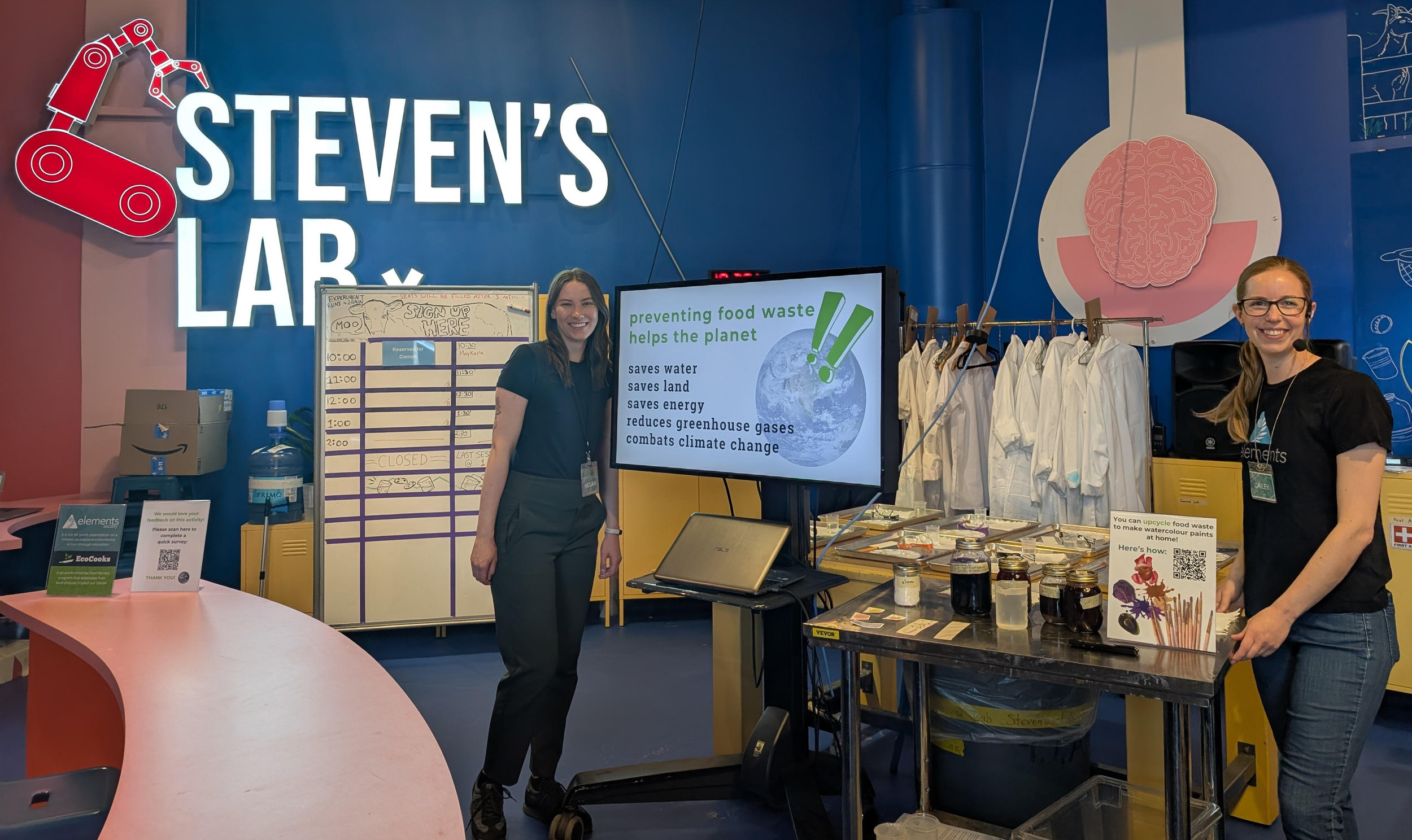
Want to make your own food waste watercolours? Here's how:
Equipment:
Large pot
Measuring cups and spoons
Mesh strainer
Mixing spoon or spatula
Glass jars with lids
Ingredients:
Colourful food scraps
Tap water
Alum (available at most grocery or bulk stores)
Steps:
1. Roughly chop your food scraps and place them in a pot. Add just enough water to cover them.
2. Simmer gently for 1–3 hours (the longer you simmer, the deeper the colour)
3. Strain the liquid into a large measuring cup using a mesh strainer and squeeze out as much dye as possible. Compost the leftover food scraps. Stop here, or:
4. Return the strained dye to the pot.
5. For every 1 cup of dye, add 1 tsp of alum. You may see solids starting to form – this is the chemical reaction.
6. Simmer gently for about 20 minutes, stirring occasionally.
7. Let cool and store in jars in the fridge. Shake well before using.
