
Food Systems Literacy Series, February Edition - What is Food Systems Literacy?
Hi, I’m Cate, an Elements team educator, and I got excited this winter to learn more about food systems literacy. I love to see how interconnected things are in the world, and I want more kids and youth to get curious about these connections. So I’m going to guide you through my big-picture learning journey in Food Systems.
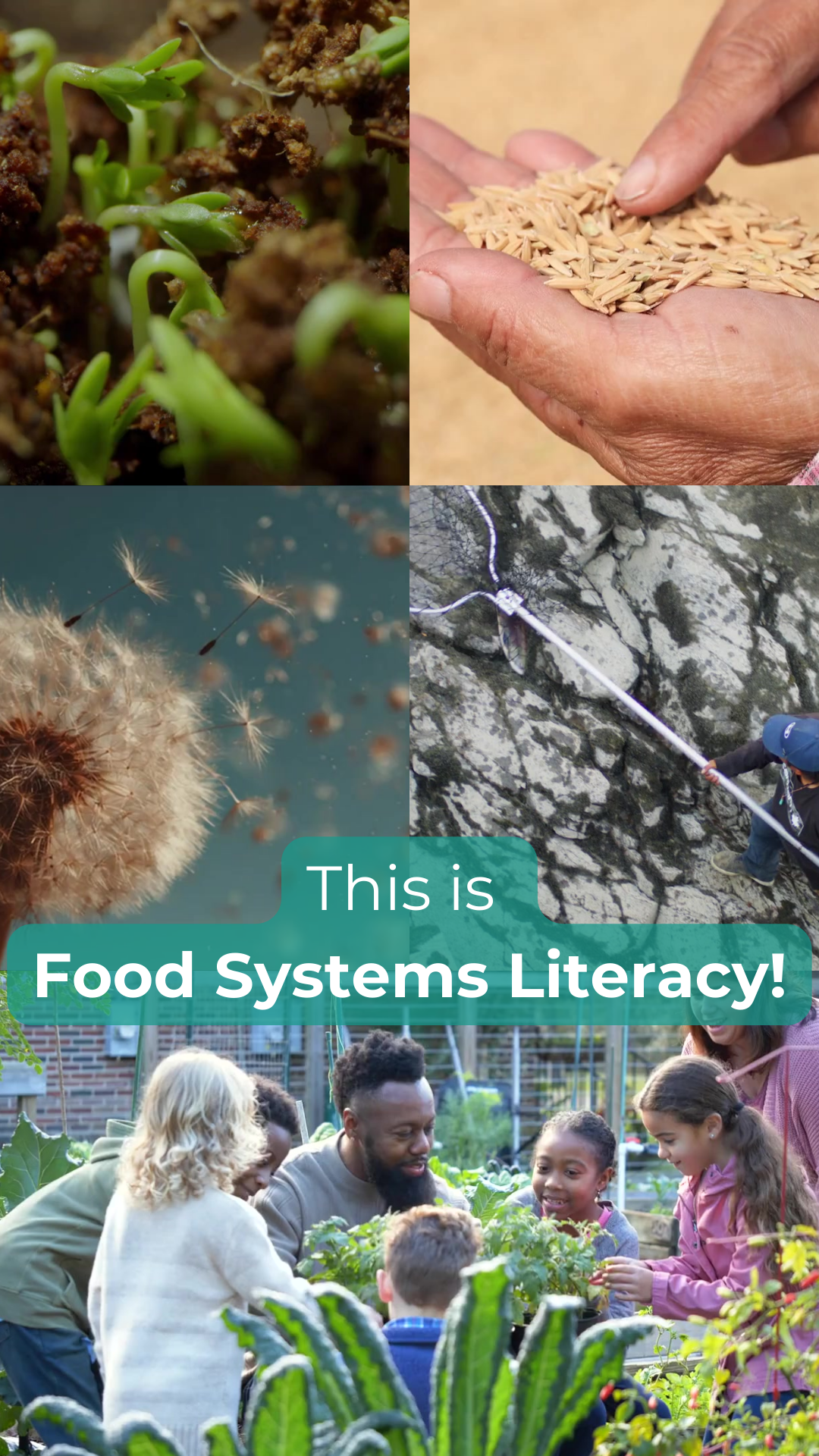
Defining food systems: an approach to looking at food activities that includes all the interactions and linked networks across agriculture, food distribution, communities, policies, cultures, and more.
I was inspired by Alicia Martin et al. (2024) who surveyed experts in food education to see what they thought the important competencies were for youth learning about food systems. From these responses, they created a Food Systems Literacy Competencies Framework, or a curriculum for students about food systems. There is so much in this curriculum! Over the next few posts, I’ll share a taste of each of the big areas of Food Systems Literacy they talk about:
Indigenous Food Systems
Food Security
Sustainability
Governance
Food Systems Activities
The first post is on Indigenous Food Systems, and I’m so inspired by what I learned for this one. Maybe next year, I’ll do a series just on Indigenous Food Systems.
At EcoCooks, we see all the time how excited students are to learn about food. Food plays such an important role in our day-to-day lives and the stories we have about our families and communities. In this Food Systems learning journey, I’m seeing all kinds of interesting questions and possibilities open up! Stay tuned here on our blog and our Instagram channel, where once a month I will post about a new area of learning. See you in March for our next big topic!
For Reference
Martin, A. E., Haines, J., & Fraser, E. D. (2024). Development of the Food Systems Literacy Competencies Framework for youth: A modified Delphi study with experts. Food Policy, 128, 102702.