
EcoCooks Vancouver
EcoCooks is an environmental food literacy program that addresses how food choices impact our planet.
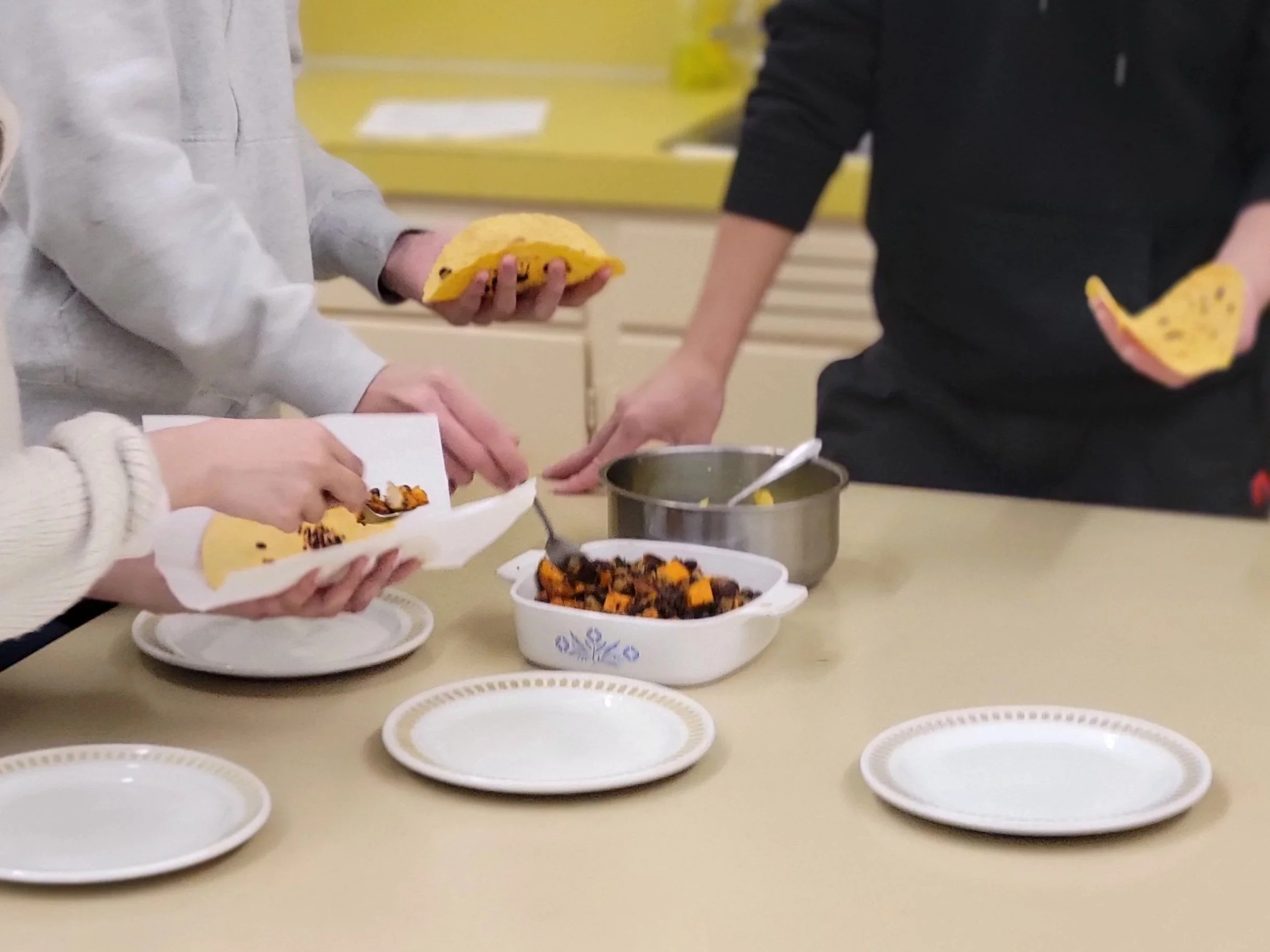
Through fun, science-based, hands-on workshops students are empowered to take environmental action with every bite.
Contribute What You Can
When filling out the booking forms linked below, please select the contribution tier that best reflects your school’s ability to support. Your selected contribution level will not affect booking priority or program quality.
It costs $1,200 to bring EcoCooks to your classroom, including educator facilitation, equipment, ingredients, curriculum development and lesson resources. The true cost of developing and sustaining EcoCooks is even greater, with grants and external funding helping to bridge that gap.
To keep this program accessible to as many students as possible, we ask schools to contribute what they can based on their capacity. Every dollar supports bringing our programs to more classrooms.
$1,200 – Full Delivery
The full cost of delivering EcoCooks, including educator facilitation, equipment, ingredients , curriculum development and lesson resources.
$600 – Program Support
Half the cost of program delivery, with the remainder supported through subsidy.
$100 – Material Contribution
The cost of the equipment, ingredients and lesson resources used in your classroom.
$0 – Full Subsidization
If your school is unable to contribute at this time, please select this option.
We at Elements believe that every young person should have access to meaningful environmental learning experiences, regardless of financial capacity. Every contribution helps make that possible.
Want to contribute but not sure how? You may wish to:
Ask your school district about available grants
Ask your principal
Ask your PAC or school council
Fundraise as a class
Ask for an individual contribution from parents
We welcome bookings from all schools, regardless of ability to contribute.
Program Descriptions
-
Module 1: Land, Water & All Living Things
Where food comes from and why we should carrot all!
As they learn where food comes from and what plants and animals need to grow, students consider land and water use as well as the needs of the flora and fauna we share the planet with.
Module 2: Grow Food, Don’t Throw Food
Where food comes from, why it gets wasted, and how we can beet this!
By exploring how food is grown and following food’s story from farm to table, students investigate where and why food gets wasted as well as some tasty ways to prevent food waste.
-
Primaire
Module 1: La terre, l'eau et tous les êtres vivants :
D'où vient la nourriture et pourquoi nous devrions tous manger des carottes.
En apprenant d'où viennent les aliments et ce dont les plantes et les animaux ont besoin pour pousser, les élèves se penchent sur l'utilisation de la terre et de l'eau ainsi que sur les besoins de la flore et de la faune avec lesquelles nous partageons la planète.
Module 2: Cultiver la terre, pas de gaspillage alimentaire !
D'où vient la nourriture, pourquoi elle est gaspillée et comment nous pouvons y remédier !
En explorant la façon dont les aliments sont cultivés et en suivant leur histoire de la ferme à la table, les élèves cherchent à savoir où et pourquoi la nourriture est gaspillée, ainsi que des moyens savoureux de prévenir le gaspillage alimentaire.
-
Module 1: The Climate Impact of Food
Turnip the heat on climate change!
As they track food production from planet to plate, students explore the impact that food can have on climate change and ways to create carbon-curbing cuisine.
Module 2: Our Food, Our Planet
Where food comes from and why we should carrot all!
By looking at the resource “recipe” of different foods, comparing the land and water used, and exploring the impacts on local ecosystems, we give students something to chew on.
Module 3: How to Beet Food Waste
Encourage mint for zero waste practices!
Students investigate food waste all along the production process and at home while learning how to reduce, reuse, and upcycle their food waste in creative ways.
Module 4: Food and the Future
From sustainable innovations to media literacy, lettuce find solutions!
We mix together food system innovations and media literacy to serve up a sustainable way forward and transform eco-anxiety into eco-action.
Reserve Your Spot
What happens next?
Once you submit, our team will reach out to work out the details - dates, timing, and anything else you need. When your booking is confirmed, contributing schools will receive an invoice and instructions for making a tax-receiptable contribution.
Teacher Guides
Curriculum Connections
From the Classroom
“My students thoroughly enjoyed the program. Each lesson began with a Land Acknowledgment which is so important. The program was fun and engaging. The lessons incorporated several cross-curricular connections between Food Studies, literacy, math and science. Many families struggle with food insecurity and the lessons about reducing food waste were extremely relevant and impactful. The recipes the students prepared allowed them to try new foods and were thoughtfully chosen to encourage students of all backgrounds and abilities to participate. The EcoCooks program provided opportunity for the students to think critically and discuss the food they consume everyday. The program was able to model how to incorporate environmental stewardship in little changes we can all make everyday.”
Teacher